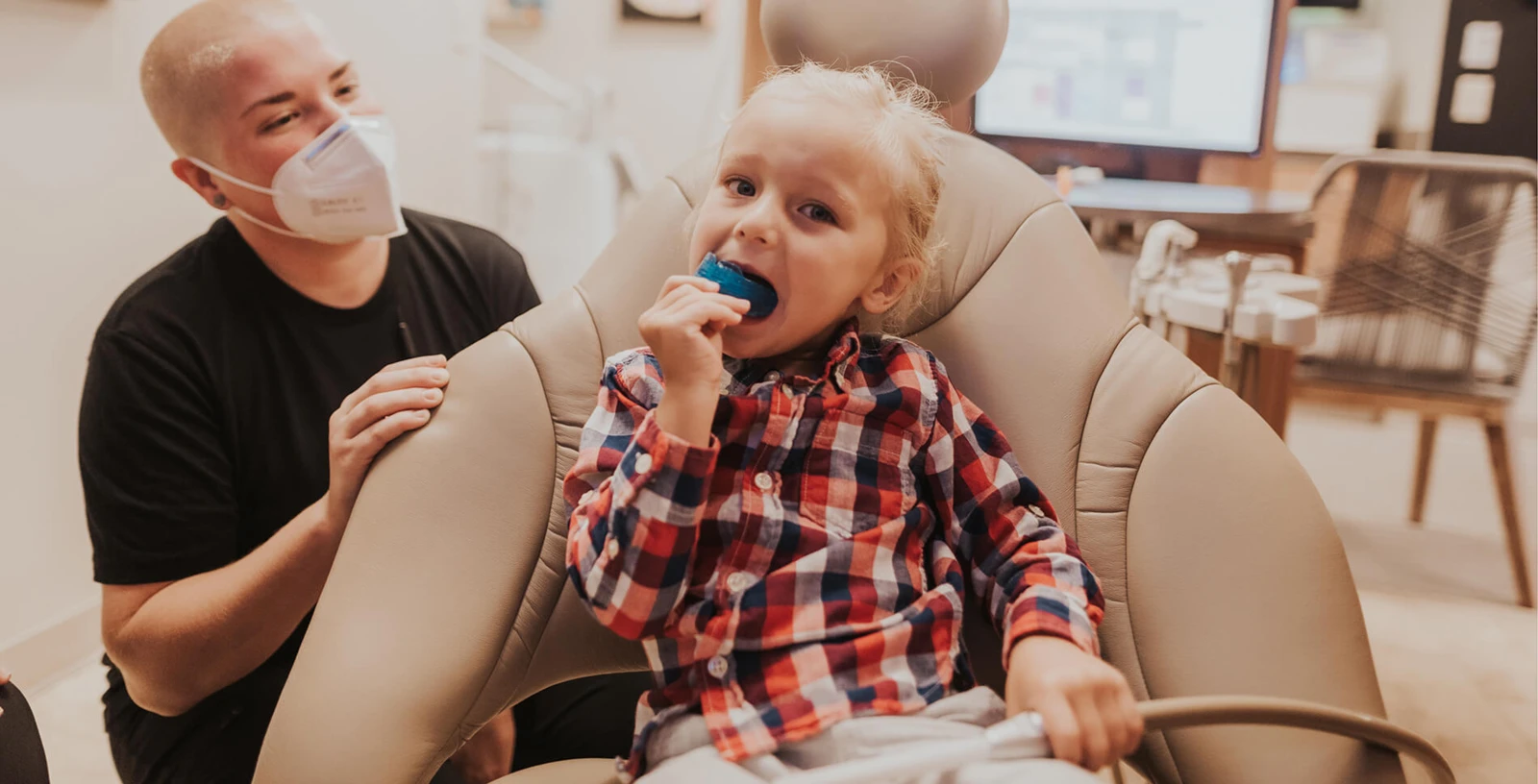
We’ll evaluate breathing, tongue posture, and oral muscle patterns, then guide you through exercises that support healthier function over time.
Better Breathing
Healthier Function
Long-Term Support
What is myofunctional therapy?
Myofunctional therapy is a set of guided exercises that help retrain the muscles of the mouth, tongue, lips, cheeks, and face.
The goal is to support healthier breathing, swallowing, resting tongue posture, jaw development, and overall oral function.
When Oral Habits Affect the Bigger Picture
Oral habits can affect more than the way your mouth moves. Tongue posture, swallowing patterns, mouth breathing, and muscle balance may influence sleep, speech, jaw comfort, and orthodontic stability.
Myofunctional therapy focuses on identifying these patterns and building healthier habits that support breathing, swallowing, and long-term oral function.
Retrain Your Tongue
Signs Your Oral Habits May Be Affecting You
You may benefit from myofunctional therapy if you experience:
Your mouth is always adapting to the way you breathe, swallow, rest, and move. When those patterns are working against your teeth, jaw, or airway, they can contribute to crowding, bite issues, poor sleep, and discomfort.
Improving muscle function can help support orthodontic treatment, airway health, jaw comfort, and long-term stability.
The Process
What to Expect With Myofunctional Therapy
1
Consultation
We talk through breathing, sleep, swallowing, oral habits, jaw tension, and any concerns you’ve noticed.
2
Functional Evaluation
We evaluate tongue posture, lip seal, swallowing patterns, breathing habits, and oral muscle function.
3
Personalized Exercises
You’ll receive guided exercises designed to retrain the muscles of your mouth, tongue, lips, and face.
4
Ongoing Practice
Progress happens through consistency, so we’ll support you as these new patterns become part of daily life.
5
Better Function
Over time, therapy can help support better breathing, swallowing, jaw comfort, and long-term oral health.
Treatment Options
Care That Supports Better Function
Myofunctional therapy may work alongside other treatments to support breathing, alignment, jaw comfort, and healthier oral function.